

Rethinking Parkinson'sfrom Where Regulation Begins: The Brain.
Parkinson's disease is a complex neurodegenerative condition. At btt Medical Institute, we approach it differently — through physician-guided brain thermodynamics and an investigational thermal therapy designed to engage the body's natural cellular response to controlled heat.
What Happens in Parkinson's Disease?
Parkinson's disease is a progressive neurodegenerative disease that affects nerve cells in a region of the brain called the substantia nigra — cells responsible for producing dopamine, a chemical messenger essential for smooth, coordinated movement.
As these nerve cells become damaged, they produce less dopamine. Communication within the brain's movement circuits is gradually disrupted. This can lead to tremor, muscle stiffness, slowness of movement, and changes in balance and walking. Many people also experience non-motor symptoms, such as changes in sleep, mood, or thinking.
Every cell depends on proteins, and each protein must fold into a precise shape to do its job. In Parkinson's disease, a protein called alpha-synuclein misfolds — it loses its correct shape — and can clump together inside nerve cells, forming deposits known as Lewy bodies. Researchers believe these misfolded protein clumps interfere with the cell's normal work and contribute to the damage seen in Parkinson's, alongside other processes such as oxidative stress, mitochondrial dysfunction, and inflammation.
Parkinson's is a complex disease, and its progression can vary significantly from person to person.
At btt Medical Institute, we believe understanding that complexity is essential to developing a truly personalized approach to care.
Request a Parkinson's EvaluationHeat Shock Proteins:
The Body's Cellular Defense System
Every cell depends on proteins to function properly — and physiological stress can cause them to become damaged or misfolded.
The human body has a natural defense mechanism for responding to this type of cellular stress: Heat Shock Proteins, or HSPs.
HSPs are specialized proteins involved in protecting cells and maintaining protein stability.
Protein
repair and refolding
Helping damaged or misfolded proteins return to a functional state.
Protein
quality control
Supporting the removal of proteins that can no longer function properly.
Cellular
stress response
Helping cells adapt during periods of physiological stress.
Cellular
protection
Helping shield essential cell components during stress.
Why does this matter in Parkinson's?
Abnormal protein folding, oxidative stress, inflammation, mitochondrial dysfunction, and progressive motor neuron damage are among the biological processes studied in Parkinson's disease.
The heat shock response is one of the body's oldest protective mechanisms — present in every cell, and naturally triggered by controlled heat.
Explore Our Research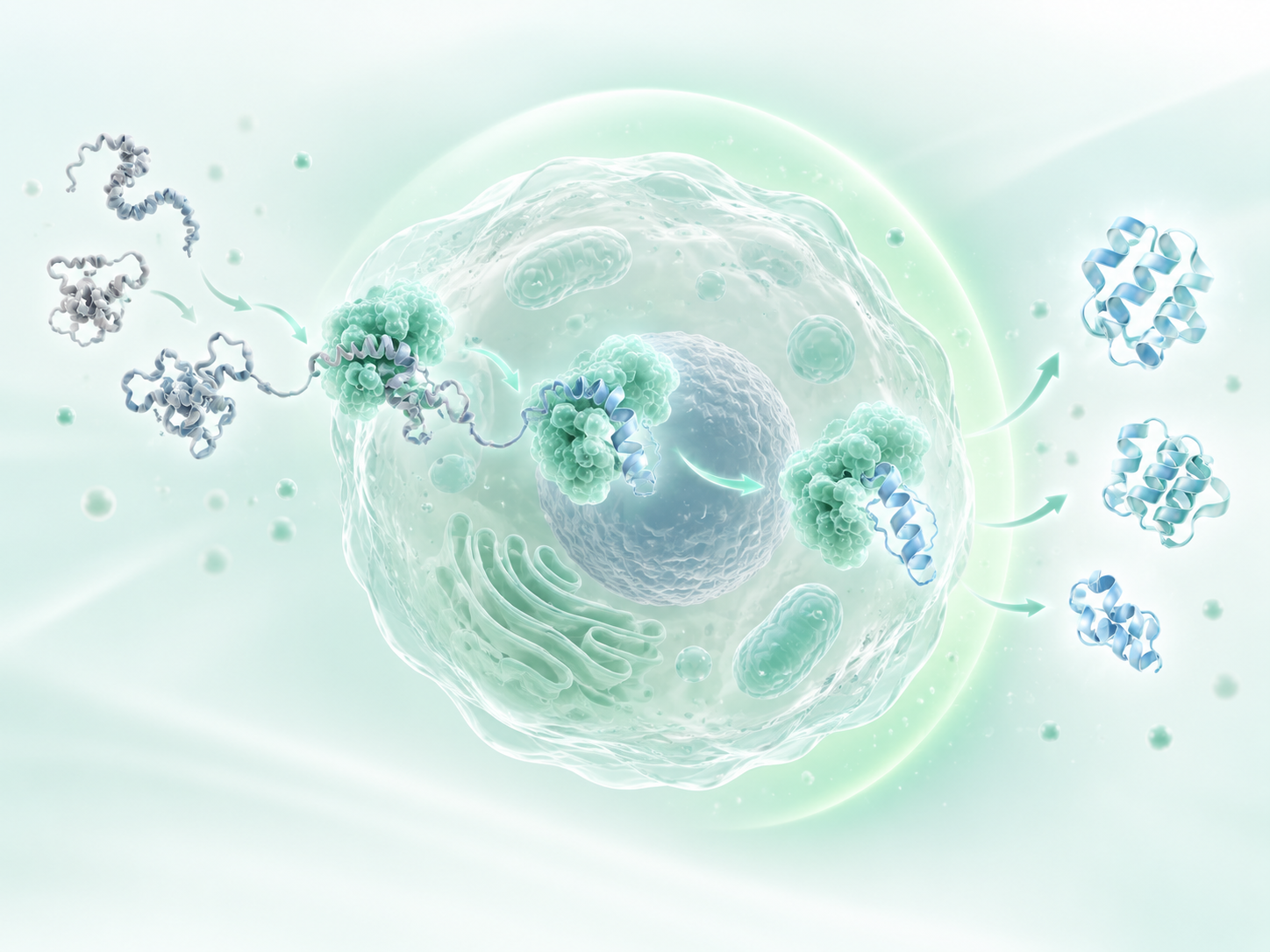
This Is Not Simply Heat.
Traditional external heat exposure and brain-guided thermal therapy — the investigational approach under study at btt — are fundamentally different.
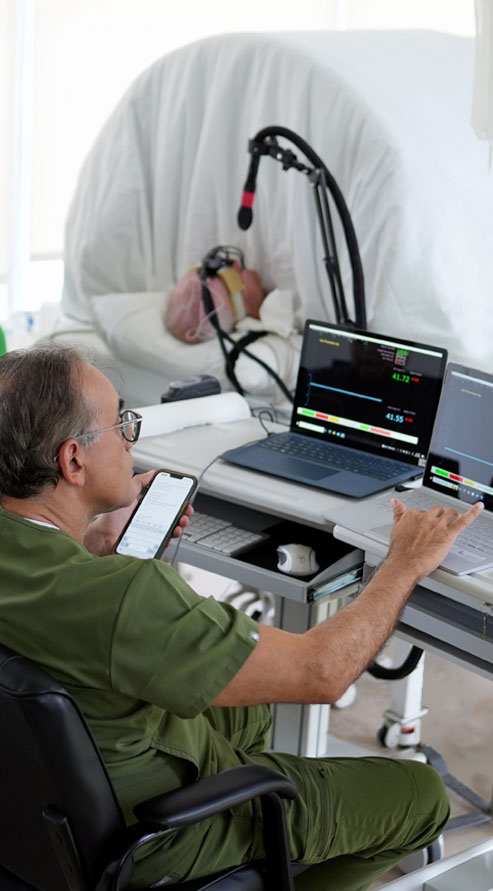
At btt Medical Institute, temperature is not applied on its own. Proprietary technology continuously monitors temperature at the site of the Brain-Eyelid Thermal Regulatory Tunnel — a thermal pathway first described by Dr. Marc Abreu. Published research suggests temperature at this site reflects the brain's thermal activity. Throughout the procedure, the medical team uses this signal to guide the patient's thermal response.
This allows protocol parameters to be adapted according to the patient's individual physiology throughout the procedure.
Continuous monitoring
Temperature at the Brain thermal tunnel site is monitored throughout the procedure.
Real-time guidance
The medical team monitors and responds to the patient's physiological signals during the procedure.
Individualized protocols
Protocol parameters are personalized rather than standardized across patients.
Controlled environment
The procedure takes place under continuous medical supervision.
What our patients say
All testimonials presented below are from patients who independently paid for their treatment at btt Medical Institute. The patients did not receive any form of compensation, payment, or other financial incentive in exchange for providing their testimonials.
The btt Experience
Every patient begins with a clinical review process designed to determine whether btt's approach may be appropriate for their condition and goals.
- Step 1
btt Assessment
Complete the form on our website and schedule a complimentary consultation with our Patient Care Team.
- Step 2
Clinical Evaluation
Following the online assessment, our clinical team will review your medical records and determine whether you are eligible for treatment.
- Step 3
Treatment Care at Our Institute
Eligible patients travel to our institute in Aventura, Florida, for 5 consecutive days of physician-guided treatment.
- Step 4
Long-Term Follow-Up
After treatment, our team provides remote follow-up and ongoing support for up to five years.
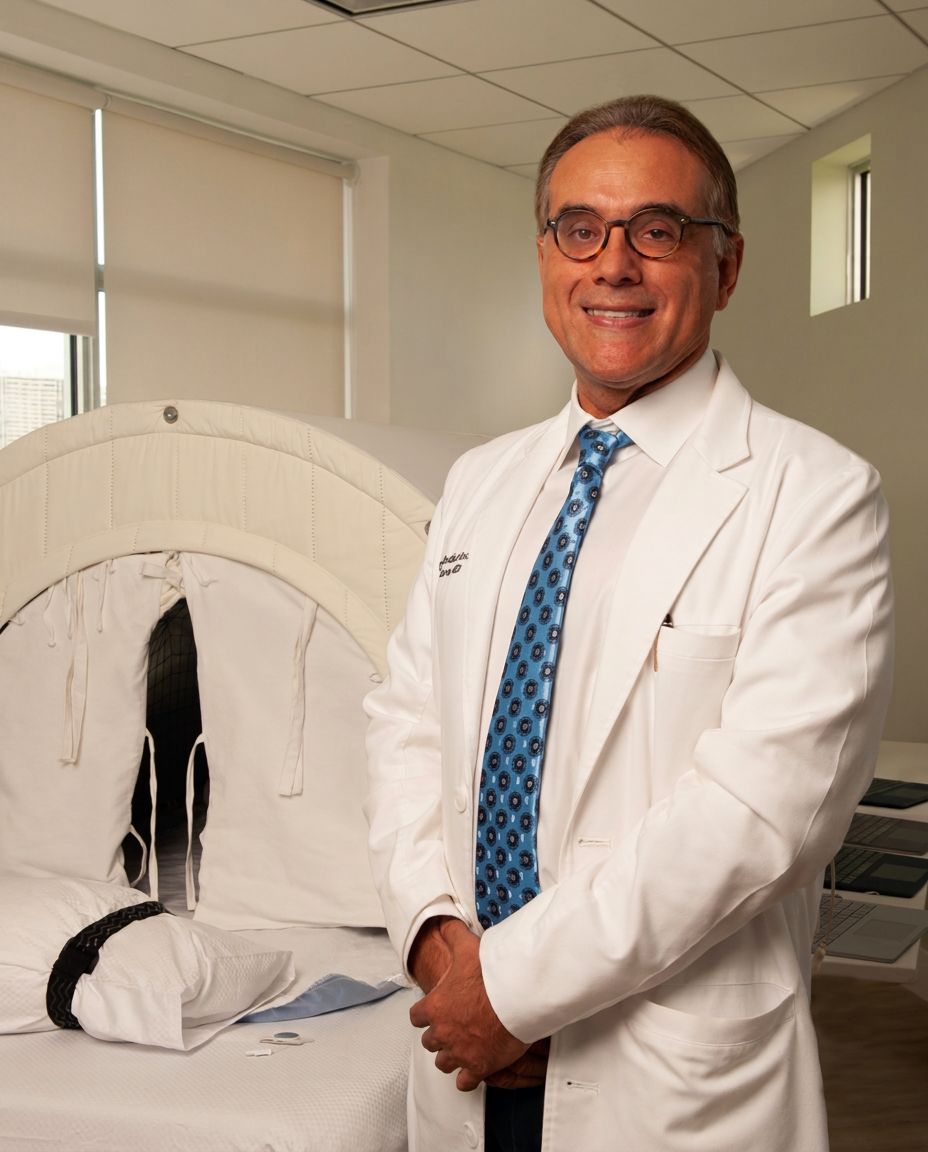
Dr. Marc Abreu
Founder of btt, physician, scientist, and pioneer in the science of brain thermodynamics, Dr. Marc Abreu is dedicated to advancing neuroscience, extending human healthspan, and transforming the future of medicine.
As Medical Director of the btt Medical Institute, he leads the clinical application of brain-guided thermodynamics for patients facing complex neurological and oncological conditions.
Learn MoreCommon Questions
About Parkinson's Treatment at btt
Is there a cure for Parkinson's disease?+
There is currently no established cure for Parkinson's disease. Available medical care — including medications that help restore dopamine signaling, and in some cases surgical options — can manage symptoms effectively for many people, often for years. Care generally focuses on controlling symptoms, maintaining function and mobility, and supporting quality of life.
What makes btt Medical Institute different?+
btt Medical Institute is advancing a new field of medicine: brain thermodynamics — the science of how the brain regulates temperature, built on more than two decades of research by Dr. Marc Abreu and the discovery of the Brain-Eyelid Thermal Regulatory Tunnel. From this science, btt developed CBIT (Computerized Brain-Guided Thermal Therapy): a physician-guided thermal therapy in which proprietary technology monitors each person's physiological response and guides controlled thermal stimulation in real time.
Why are heat shock proteins being studied in Parkinson's?+
Heat shock proteins are part of the body's natural cellular response to physiological stress. They participate in protein folding, cellular protection, and other mechanisms relevant to maintaining cellular function. Because abnormal protein behavior — including the misfolding of alpha-synuclein — and cellular stress are among the mechanisms studied in Parkinson's disease, the heat shock response is an area of active scientific research.
Is the procedure invasive?+
The btt approach is noninvasive and does not require surgery or direct access to the brain. Patients remain under clinical supervision throughout the procedure.
Do I need to stop my current medications?+
Patients should not stop prescribed medications unless instructed to do so by their treating physician. Medication history is reviewed as part of any clinical evaluation.
How can I learn more about btt's research?+
Visit our Research page or contact btt Medical Institute for more information.
Take The Next Step
The first step is a clinical evaluation. Our team will review your history, discuss your goals and help determine whether brain-guided thermodynamics may be appropriate for your care journey.
Contact btt