
Find Out Which Studies Involved the Participation of Physician and Researcher Marc Abreu
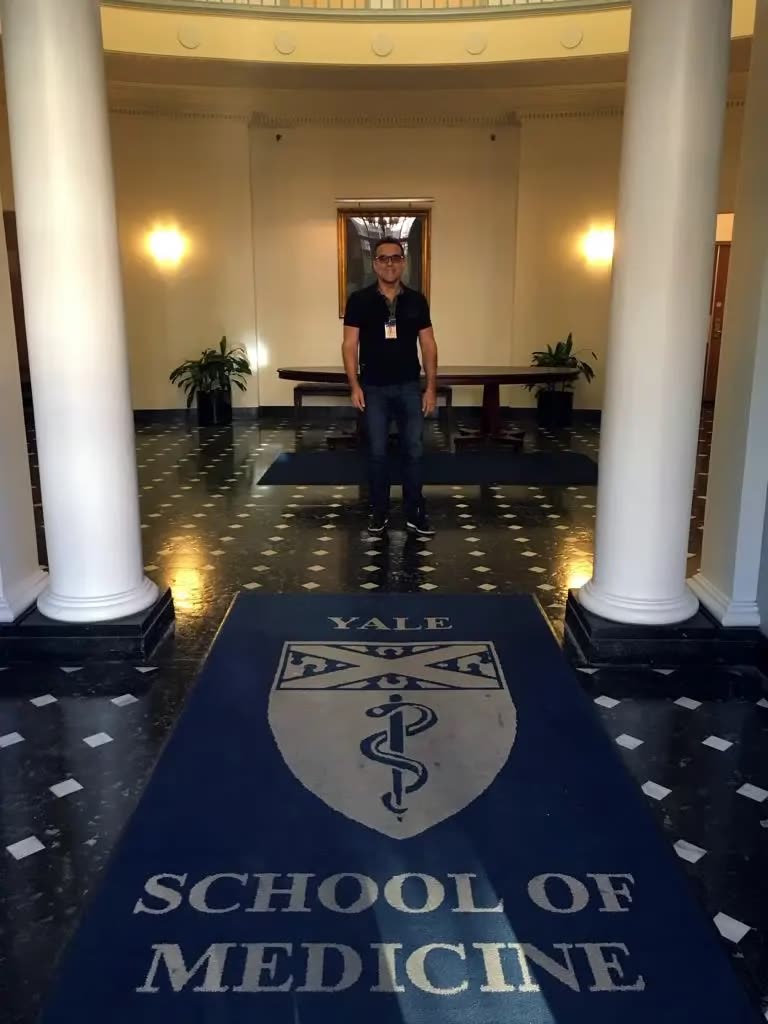
From Harvard to Yale, check out research and studies authored and contributed to by physician and researcher Marc Abreu.
Authority isn’t something you build overnight. It takes dedication, years of study and research, and, of course, experience that builds over time. These are characteristics that characterize the career of physician and researcher Marc Abreu, creator of btt technology. In this article, we discuss Dr. Marc Abreu’s academic career and list the research and studies that benefit from his contributions.
Academic background of physician and researcher Marc Abreu
A graduate of the Paulista School of Medicine at Unifesp , Dr. Marc Abreu is a physician and surgeon with a residency in ophthalmology and a recipient of the Professor Renato de Toledo Award for best resident. He expanded his training at the University of Pittsburgh School of Medicine and the Indiana University School of Medicine in the United States.
A graduate of the renowned Harvard Medical School , where he also held prominent roles as a professor and researcher, including developing lasers for the U.S. Air Force and Department of Defense , Marc Abreu continued to make significant contributions to the medical field. At Yale University School of Medicine , where he remained for over fifteen years, he served as a researcher and professor in the Department of Anesthesiology and completed postdoctoral work in the Department of Ophthalmology and Visual Sciences.
Since his first scientific publication in 1985 in neuro-ophthalmology, Dr. Marc Abreu has maintained a continuous interest and work in neurology and the study of the brain and cerebral thermodynamics. With more than 30 papers, including published articles, preprints, and presentations at prestigious conferences such as the Anesthesiology Annual Meeting of the American Society of Anesthesiologists (ASA) and the Annual Congress of the Society for Thermal Medicine (STM) , he is known for his advances in hyperthermia and hypothermia applied to medicine.
With over 116 patents in over 60 countries, including Brazil and the United States, some important achievements in the area of intellectual property include:
- Marc Abreu created and developed the first system to measure brain temperature continuously and noninvasively ( U.S. Patent No. 7,187,960 ), resulting in the Abreu btt™ 700 System.
- Dr. Marc invented a home-use device for continuous measurement of eye pressure using a disposable contact lens for glaucoma monitoring, with his patent being sold to Alcon.
- Dr. Marc Abreu was also responsible for the discovery and delineation of glucose’s molecular radiation signature ( U.S. Patent No. 7,403,805 ).
- Developed algorithms for the first automated recall and computer-based medical notification system.
The physician and researcher Marc Abreu is internationally recognized for his innovative contributions in the field of medicine and the development of medical devices. Still wondering who Marc Abreu is? Or what is the biography of Dr. Marc Abreu? In the article titled “ Who is Marc Abreu? Discover the journey of the creator of btt technology Published on our blog, you can learn a bit more about Dr. Marc’s story
What are Dr. Marc Abreu’s scientific research studies?
Dr. Marc Abreu’s academic background establishes him as one of the most accomplished Brazilian scientific researchers. Since the beginning of his academic journey, his work has been regularly published in collaboration with renowned institutions where he developed his main projects. These studies led to the discovery and refinement of btt (Brain Thermal Tunnel) technology — a revolutionary method that uses brain thermodynamics, thermoregulatory frequencies, and artificial intelligence to develop noninvasive molecular treatments by inducing heat shock proteins through the brain.
We highlight below the scientific research and works authored or with the participation of doctor and researcher Marc Abreu:
- Escola Paulista de Medicina (EPM) da Universidade Federal de São Paulo (UNIFESP): Application of the pupil cycle time test in neurophthalmologic patients.
- Harvard Medical School: Diode laser-pumped, frequency-doubled neodymium: YAG laser peripheral iridotomy.
- Indiana University School of Medicine: Effects of short term increase of intraocular pressure on optic disc cupping.
- University of Pittsburgh School of Medicine: Topical verapamil and episcleral venous pressure.
- University of Pittsburgh School of Medicine: Effect of topical anti-inflammatory treatment on the long-term outcome of laser trabeculoplasty. Fluorometholone-Laser Trabeculoplasty Study Group.
- Yale School of Medicine: Yale Physician Designs First Self-Testing Device for Glaucoma
- Yale School of Medicine: An at-home test for glaucoma
- Yale School of Medicine: Scientist invents device for at-home testing of glaucoma
- Yale School of Medicine: An at-home test for glaucoma
- Yale School of Medicine: Discovery reveals new way to monitor body temperature
- Yale School of Medicine: Yale Researcher Discovers “Brain Temperature Tunnel” That For The First Time Allows External Continuous Measurement of Brain Temperature
- Yale School of Medicine: Acetyl-L-carnitine for the treatment of diabetic peripheral neuropathy
- Previously unseen brain-eyelid thermal tunnel reveals biological waveguide and transorbital thermophysical pathway to the brain
- Biophysical Basis of Thermometry Limitations to Control COVID-19 are Overcome at Transmissive Skin Overlying Brain-eyelid Thermal Tunnels
- Brain thermal kinetics at brain-eyelid thermal tunnels overcoming COVID-19 thermometry limitations for automated asymptomatic infection detection in concert with physical and biological principles
- Brain/core Discordance due to Neuronal Activity Identified by Noninvasive Brain Temperature Measurement via Brain-eyelid Thermal Tunnels
btt research conducted by Dr. Marc Abreu that was selected for presentation at national medical conferences in the United States:
- Yale School of Medicine: Noninvasive Assessment of Intracranial Temperature Via the Medial Canthal-Brain Temperature Tunnel
- Yale School of Medicine: Noninvasive Surface Monitoring of Core Temperature Via a Medial Canthal Brain Temperature Tunnel
- Yale School of Medicine: Noninvasive Core Temperature Monitoring during Cardiopulmonary Bypass Via a Brain Temperature Tunnel
- Yale School of Medicine: Infrared Thermographic Analysis of Temperature on the Face, Forehead, Neck, and SuperoMedial Orbit
- Yale School of Medicine: Noninvasive Documentation of Delayed Brain Cooling during Deliberate Hypothermia
- Yale School of Medicine: Consistency of Brain Temperature Tunnel Measurements in Different Environmental Temperature
- Yale School of Medicine: Anatomy of Skin Sites Contribute to Their Suitability or Lack Thereof for Temperature Monitoring
- Yale School of Medicine: Temperature Can Be Much More Than a Dichotomous Variable
- Yale School of Medicine: Detection of Brain Cooling during Craniotomy with a Surface Temperature Monitor
- Yale School of Medicine: Noninvasive Monitoring of Temperature during Sleep: Can We Detect Awareness and Arousal?
- Yale School of Medicine: Documentation of Potentially Harmful Cerebral Hyperthermia with a Noninvasive Surface Sensor
- Yale School of Medicine: Noninvasive Quantification over a Brain Temperature Tunnel of Increased Brain Temperature During ECT
- Yale School of Medicine: The Brain Temperature Tunnel: More Than a Path for Monitoring Temperature
- Yale School of Medicine: Repeated Comparisons of Brain Tunnel And Sublingual Temperature Measurements
- Yale School of Medicine: Noninvasive Quantification of Pain Observed via Increased Brain Temperature During Brain Temperature Tunnel Monitoring
- Yale School of Medicine: Noninvasive Delineation of Ipsilateral Decline in Brain Temperature During Acute Ischemic Stroke
- Yale School of Medicine: Noninvasive Monitoring of Decrease in Brain Temperature During Monitored Anesthesia Care with Propofol
- Yale School of Medicine: Monitoring Temperature of the Brain Thermal Tunnel: Is It Influenced by Facial Temperature?
- Yale School of Medicine: Do Seizures, Pain, Thought and Emotion Share Common Range of Brain Temperature?
Dr. Marc Abreu served as Co-Director of Multidisciplinary Research on btt at Yale University, and this extensive list of publications reflects a multidisciplinary effort in collaboration with prestigious institutions such as: Yale University, Yale School of Medicine, the National Institutes of Health (NIH), the National Youth Sports Health & Safety Institute (NYSHSI) in the United States, Hartford Hospital, University of Connecticut Health Center, Embrapa (Brazilian Agricultural Research Corporation), the Brazilian Ministry of Culture and Development, the University of São Paulo (USP), the Federal University of São Paulo (UNIFESP), among others.
They are the result of years of research by Dr. Marc Abreu, reflecting his extensive academic, scientific, and above all, practical knowledge, including his numerous observations regarding brain thermodynamics. This comprehensive background ultimately establishes him as a leading medical authority in the field of brain thermodynamics and technological advancement in medicine worldwide.
Discover also studies on btt conducted by other doctors and researchers:
- The Brain Temperature Tunnel: a noninvasive technique for monitoring core temperature
- Wide Potential for noninvasive Brain Temperature Monitoring System
- The Effect Of Mental And Physical Stress On Brain Temperature As Measured Via Brain Temperature Tunnel
- Manipulating neck temperature alters contagious yawning in humans
- Infrared Imaging of the Brain-Eyelid Thermal Tunnel: A Promising Method for Measuring Body Temperature in Afebrile Children
- Reference breast temperature: proposal of an equation
About btt Medical Institute
The btt method is revolutionizing the treatment of diseases once considered untreatable, improving the quality of life for an increasing number of patients.
Related Articles
Early Signs of ALS That Are Often Overlooked or Misdiagnosed
Early symptoms of ALS can be subtle and are frequently mistaken for more common neuromuscular conditions.

The Connection Between Sleep, Brain Temperature, and Healing
Human sleep is fundamentally thermoregulatory. Small shifts in brain temperature shape recovery, cognition and repair.
How Personalized Protocols Are Changing Neurotherapy
Standardized treatments are necessary, but personalization often determines whether patients experience meaningful, sustained gains.